
The Ladder: How a Lesbian Magazine Helped Build a Movement
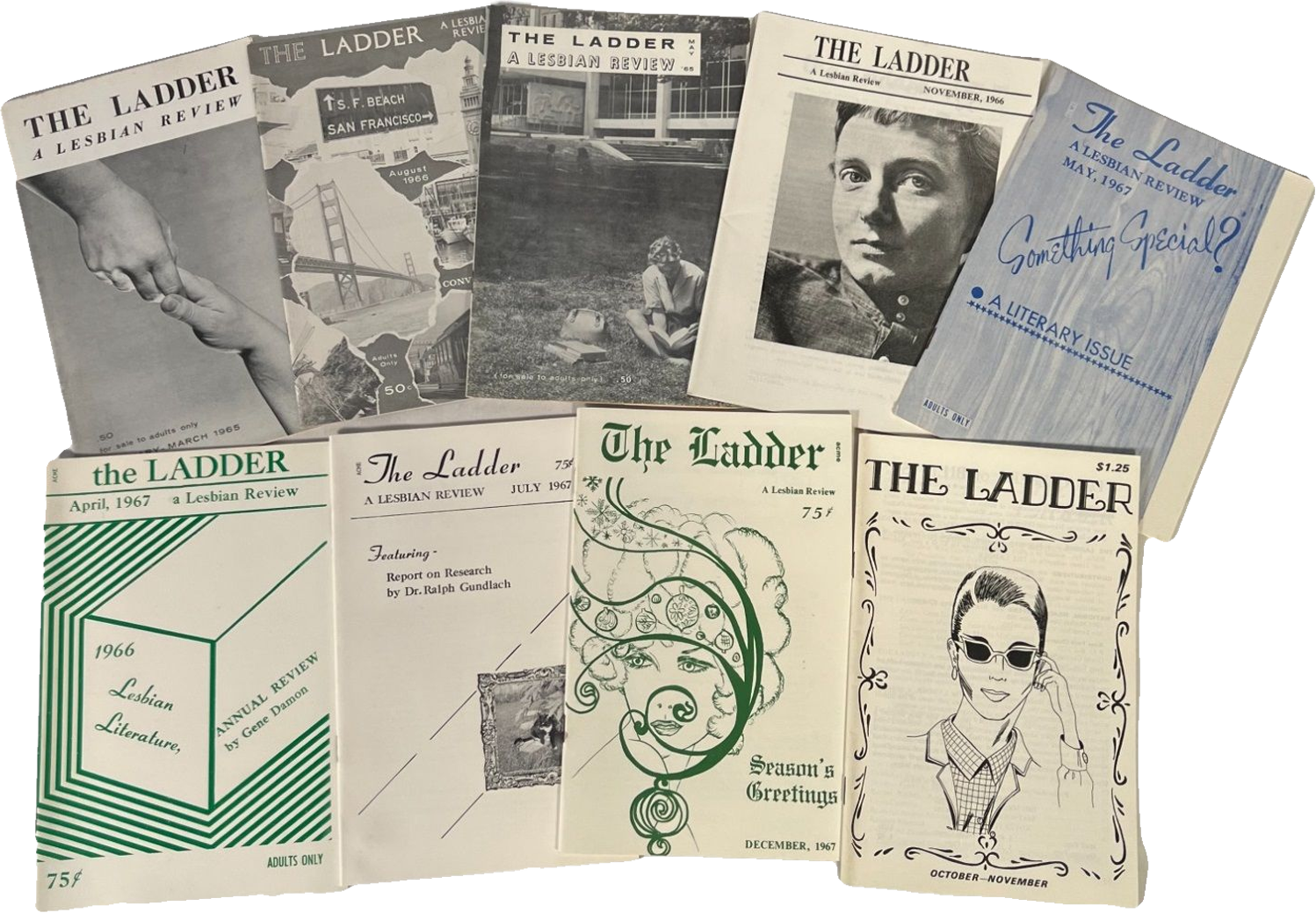
The Ladder: A Publication That Changed Lesbian History
In October 1956, a small magazine began circulating quietly among women across the United States.
It was called The Ladder.
Published by the Daughters of Bilitis, the first lesbian organization in the United States, The Ladder became the first nationally distributed lesbian periodical in the country. At a time when lesbian lives were largely invisible in public culture—and often criminalized—the magazine offered something rare and powerful: connection.
For thousands of women living in isolation, The Ladder became a lifeline.
It was a place where lesbians could read about others like themselves, share ideas, and begin imagining community beyond the limitations placed on them by society.
Today, the legacy of The Ladder continues to resonate—especially at Lyon-Martin Community Health Services, which was named in honor of two of the magazine’s earliest leaders, Phyllis Lyon and Del Martin.
The Origins of The Ladder
The story of The Ladder begins in San Francisco in 1955, when four lesbian couples formed a social organization called the Daughters of Bilitis (DOB).
At the time, bars were often the only places where lesbians could gather publicly. These spaces were frequently raided by police, and patrons risked arrest, public outing, and loss of employment.
The Daughters of Bilitis sought to create something different:
a safer space for women to connect, build community, and support one another.
As the organization grew, chapters formed in cities across the country including New York, Los Angeles, and Chicago.
But communication between members remained difficult.
Phyllis Lyon, a journalist by training, proposed a solution.
The organization would create a publication that could connect women across distances and share information about lesbian life.
That publication became The Ladder.
A Magazine Built by Community
The first issue of The Ladder was modest.
Only 175 copies were printed.
Volunteers typed the pages on typewriters, reproduced them using mimeograph machines, and hand-stapled each issue together.
Copies were mailed discreetly to women across the country—often wrapped in plain brown paper to protect the privacy of readers.
Within a few years, hundreds of women had subscribed. Eventually the magazine would reach thousands of readers worldwide.
But the impact of The Ladder extended far beyond its subscriber list.
Copies were frequently shared, passed from hand to hand, and read aloud at gatherings.
For many women, it was the first time they encountered a publication that spoke directly to their lives.
What The Ladder Published
Early issues of The Ladder contained a wide range of content, including:
• Personal essays
• Poetry and short fiction
• Book reviews of lesbian literature
• Research and commentary about homosexuality
• Advice columns
• Letters from readers
• Updates about Daughters of Bilitis meetings and activism
The publication quickly became one of the most important sources of information for lesbians in the United States.
At a time when mainstream media portrayed homosexuality almost exclusively as deviant or pathological, The Ladder offered a radically different message:
Lesbians were not alone, and their lives mattered.
Behind the Name
The title The Ladder carried symbolic meaning.
Many historians believe the name referenced an escape from the “well of loneliness,” a phrase popularized by Radclyffe Hall’s influential 1928 lesbian novel The Well of Loneliness.
The magazine’s first cover featured simple line drawings of two figures standing beneath a ladder rising into the clouds.
The image suggested ascent—
a path upward out of isolation.
Visibility Took Courage
In its earliest years, contributors to The Ladder often used pseudonyms or initials.
Public identification as a lesbian could lead to devastating consequences, including loss of employment, family rejection, or arrest.
For this reason, the magazine initially relied on illustrations rather than photographs.
That changed in the 1960s.
Under editor Barbara Gittings, The Ladder became increasingly political and visible.
In 1964, the magazine added the subtitle “A Lesbian Review” to its cover.
For the first time, the word lesbian appeared openly on the publication.
Soon afterward, the magazine began featuring photographs of real lesbians on its covers.
Appearing publicly as a lesbian during this period required immense courage.
These images signaled a powerful shift—from protection toward visibility.
They helped make lesbian lives visible in public culture for the first time.
A Political Voice Emerges
As the homophile movement gained momentum during the 1960s, The Ladder increasingly engaged with political issues.
The magazine reported on activism, legal debates, and public protests led by early LGBTQ organizations.
In 1959, The Ladder played a role in responding to accusations that San Francisco had become a “haven for sex deviants.”
The magazine published a detailed rebuttal that helped push the issue of homosexuality into public political discussion for the first time.
Historian Rodger Streitmatter later wrote that the publication helped make homosexuality a political issue in American life.
THE END OF THE MAGAZINE
The Ladder continued publication until September 1972.
Like many grassroots publications, it struggled financially and relied heavily on volunteers and anonymous donors.
Despite its challenges, the magazine had already helped transform lesbian culture in the United States.
It had connected thousands of women across the country and helped nurture the political consciousness that would fuel later LGBTQ rights movements.
The Legacy of Phyllis Lyon and Del Martin
Two of the most influential figures behind the Daughters of Bilitis, and the broader lesbian movement, were Phyllis Lyon and Del Martin.
Both women were journalists who believed deeply in the power of information and storytelling.
Their work helped create the earliest national networks of lesbian organizing in the United States.
Decades later, their legacy would inspire the naming of Lyon-Martin Community Health Services, a clinic dedicated to providing affirming healthcare for queer, trans, nonbinary, and intersex communities.
From The Ladder to Lyon-Martin
The values that shaped The Ladder continue to shape Lyon-Martin today.
Both grew from the same belief:
Access to knowledge and community can change lives.
Where The Ladder provided information and connection through print, Lyon-Martin provides healthcare rooted in dignity, autonomy, and community care.
Today, Lyon-Martin serves thousands of patients each year with:
• gender-affirming care
• sexual and reproductive health services
• mental health support
• harm reduction programs
• primary care rooted in reproductive justice
The clinic’s history reflects the same grassroots spirit that defined The Ladder.
Lyon-Martin itself was founded in 1979 by healthcare providers and community organizers determined to create affirming care for lesbians and queer women in San Francisco.
Over time, the clinic expanded its mission to serve trans, nonbinary, and intersex communities as well.
Why This History Still Matters
The world that produced The Ladder was one where lesbians had almost no access to accurate information about their lives or health.
While progress has been made, many LGBTQ communities still face barriers to healthcare, information, and safety.
The legacy of The Ladder reminds us that:
• Community knowledge saves lives
• Visibility can transform culture
• Grassroots organizing builds lasting institutions
Lyon-Martin continues that work today.
Continuing the Conversation
To honor this legacy, Lyon-Martin has launched The Ladder, a new blog dedicated to sharing health education, community history, and stories from the people who shape our work.
Through the blog, we explore topics including:
• gender-affirming care
• sexual and reproductive health
• gynecological care across genders
• mental health and body sovereignty
• harm reduction and community care
• navigating healthcare systems
• LGBTQ history and collective liberation
Just as the original magazine connected women across the country, our blog continues that tradition of knowledge-sharing and community care.
Join the Conversation
Knowledge has always been a form of care.
Explore new stories and resources on The Ladder, Lyon-Martin’s blog.
👉 Visit lyon-martin.org/blog
👉 Sign up for our newsletter for monthly updates
Together, we continue a legacy of connection, care, and community.