
The History of Lyon-Martin
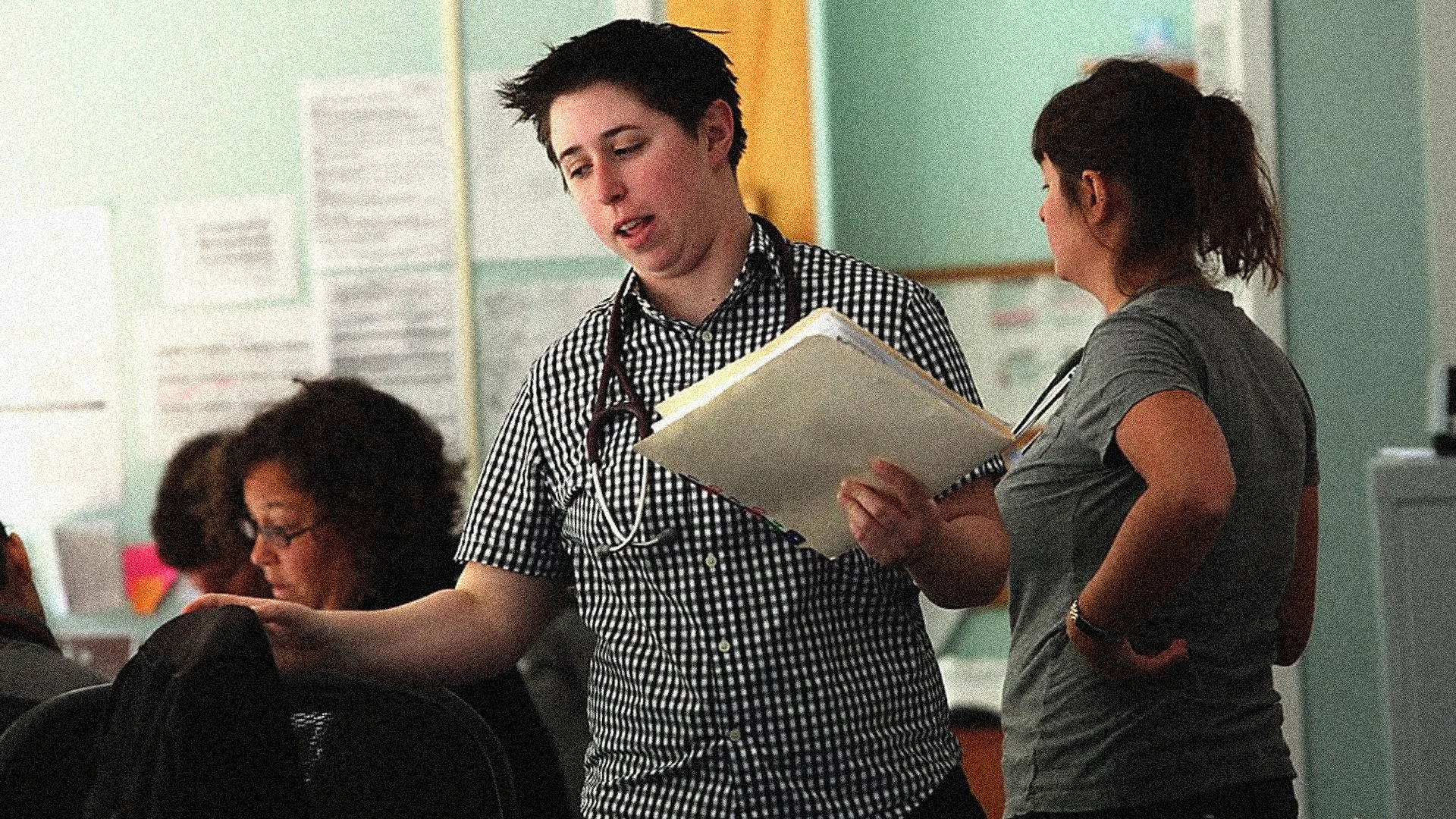
A Clinic Built by Community
Lyon-Martin Community Health Services began with a simple but radical idea:
Healthcare should be safe, affirming, and accessible for people who have historically been excluded from it.
Founded in 1979 in San Francisco, Lyon-Martin started as a small clinic created by healthcare providers who recognized a serious gap in medical care for lesbians and queer women.
At the time, many patients avoided seeking medical care altogether due to stigma, discrimination, or lack of provider knowledge.
The clinic that would become Lyon-Martin was built to change that.
From its earliest days, Lyon-Martin operated with a philosophy that continues to guide the organization today:
By us, for us.
The Origins: Addressing a Healthcare Gap
The foundation of Lyon-Martin began as a research project.
In the late 1970s, a group of lesbian OB-GYN residents at UCSF, including Dr. Patty Robertson, Sherron Mills, NP, and Alana Schilling, began studying the health of lesbians and bisexual women.
They were seeing a pattern that could not be ignored.
Patients were presenting with advanced cervical cancer and untreated complications of sexually transmitted infections—conditions that could have been prevented with earlier care.
The issue was not just medical.
It was structural.
Many women who had sex with women were avoiding healthcare altogether due to stigma, discrimination, and fear of mistreatment.
The findings made one thing clear:
This was not simply a gap in knowledge. It was a gap in access, trust, and safety.
And it required a different kind of response.
Founding the Clinic
In 1979, that response took shape.
Robertson, Mills, and Schilling established a clinic designed specifically to provide nonjudgmental, affordable healthcare for lesbians.
The organization was originally founded as The Women’s Alternative Health Service.
Soon after, with permission, the clinic was named in honor of two pioneering lesbian activists whose work helped build the foundation for LGBTQ community organizing:
Phyllis Lyon and Del Martin.
The clinic became known as Lyon-Martin Women’s Health Services.
Funding was modest.
The founders raised $500 at a benefit concert held at the Women’s Building in San Francisco—enough to launch the clinic’s first services.
What began as a small, community-driven effort quickly became an essential resource.
Early Growth
Lyon-Martin initially operated with an all-volunteer staff, offering medical services two evenings per week.
Demand for care quickly exceeded expectations.
Within a year, it became clear that the community needed a full-time clinic capable of providing continuity of care.
In 1980, Lyon-Martin opened a permanent clinic location on Fillmore Street, expanding operations to five days per week plus evening hours.
Over the following decades, the clinic moved several times as it grew:
• Fillmore Street (1979–1983)
• 2480 Mission Street (1983–1990)
• 1748 Market Street (1990–2018)
• 1735 Mission Street (2018–present)
Each move reflected the clinic’s expanding role in serving the community.
Expanding Care for Transgender Communities
Although Lyon-Martin was originally founded to serve lesbians, the clinic’s mission evolved as the needs of the community changed.
By the early 2000s, Lyon-Martin had become one of the first community clinics in the country to formalize access to gender-affirming hormone therapy and surgery referrals.
During this time, the clinic also made an important decision to change its name.
It transitioned from Lyon-Martin Women’s Health Services to Lyon-Martin Health Services to better reflect the full community it served.
For many transgender men, using documentation tied to a “women’s health” clinic could lead to being involuntarily outed in medical, legal, or workplace settings.
The name change was a necessary step toward safety, dignity, and inclusion.
Phyllis Lyon, whose name the clinic carries, was deeply supportive of this evolution.
Her response to the change was simple:
Why didn’t you do that earlier?
Her lifelong commitment to expanding care and recognition for the community continues to shape Lyon-Martin’s approach today.
Advancing Trans Health Education
In 2009, Lyon-Martin launched Project HEALTH, a program designed to expand provider education around transgender healthcare.
The program included training, technical assistance, and clinical rotations for healthcare providers.
Project HEALTH later launched TransLine, the first freely available transgender health e-consultation service in the United States.
Through TransLine, clinicians across the country can receive guidance from experts in transgender care when treating patients.
This program has helped improve access to competent care for transgender patients nationwide.
The Women’s Community Clinic
Another important part of Lyon-Martin’s history comes from The Women’s Community Clinic, which would later merge with Lyon-Martin.
The clinic was founded in 1999 after the closure of the Women’s Needs Center, a program originally operated by the Haight-Ashbury Free Clinics.
Within four months of its closure, Jessica Wolin and a group of volunteers reopened the clinic as an independent organization.
Their goal was simple but powerful:
Provide free healthcare for women by women in a safe and respectful environment.
The clinic operated for years as a vital community health resource in San Francisco.
Partnership and Transition
In 2015, Lyon-Martin merged with HealthRIGHT 360, a nonprofit organization providing behavioral health and social services across California.
The partnership was designed to help stabilize the clinic financially and expand its services.
In 2017, Lyon-Martin and The Women’s Community Clinic joined together at 1735 Mission Street, combining staff, patients, and services.
The newly combined clinic adopted a new name:
Lyon-Martin Community Health Services
A name that reflects both legacy and expansion.
A Community Fights to Save the Clinic
Just two years later, the clinic faced another major challenge.
In 2020, HealthRIGHT 360 announced plans to close Lyon-Martin, citing financial concerns.
The response from the community was immediate.
Patients, staff, advocates, and city leaders organized to preserve the clinic.
Their message was clear:
Lyon-Martin was not simply a healthcare provider.
It was a community institution.
Through collective advocacy and organizing, the clinic regained its independence.
Independence and Renewal
In March 2022, Lyon-Martin Community Health Services officially separated from HealthRIGHT 360 and became an independent Federally Qualified Health Center.
The newly independent organization emerged stronger than ever.
Since gaining independence, Lyon-Martin has:
• Expanded its services
• More than doubled its operating budget
• Launched innovative programs including a guaranteed income initiative for trans community members
• Expanded outreach services to street-based sex workers
The clinic is now preparing for a new chapter with the development of a permanent home designed to serve future generations.
A Legacy of Perseverance
Throughout its history, Lyon-Martin has faced financial challenges, political obstacles, and structural barriers that have threatened its survival.
But again and again, the clinic has endured.
As Del Martin once said:
“The best way to honor us is to carry on the work that has been done. Perseverance. In every loss are the seeds of success. Patience. Education never-ending. Continue to work with youth, but tell them about our history.”
Lyon-Martin’s story is one of perseverance, community leadership, and collective care.
From Grassroots to Community Health Center
Today, Lyon-Martin Community Health Services serves thousands of patients each year, many of whom face barriers to healthcare due to cost, discrimination, or systemic inequities.
The clinic provides:
• gender-affirming care
• sexual and reproductive health services
• mental health care
• harm reduction programs
• primary care
• community outreach services
More than 65 percent of Lyon-Martin’s patients identify as transgender, nonbinary, or gender nonconforming.
What began as a volunteer-run clinic serving a small community has grown into one of the most respected LGBTQ health centers in the United States.
Why This History Matters
Lyon-Martin exists because communities came together to build something that did not exist before.
The clinic was never just a healthcare provider.
It has always been a community response to injustice.
Its history reminds us that healthcare systems do not change on their own.
They change because people organize, advocate, and build alternatives.
Continuing the Work
More than forty years after its founding, Lyon-Martin continues to expand access to affirming healthcare.
The work that began in 1979 is still unfolding today.
And the future of the clinic will continue to be shaped by the same principle that guided its founders:
Healthcare should belong to the communities it serves.
Want to Learn More?
Explore more stories about Lyon-Martin’s history and community impact on The Ladder, our blog.
👉 Visit lyon-martin.org/blog
👉 Sign up for our newsletter for monthly updates
Together, we continue a legacy of community care, knowledge, and liberation.