
The People’s Health Budget: A Community Guide to Policy, Advocacy, and Healthcare Equity in San Francisco
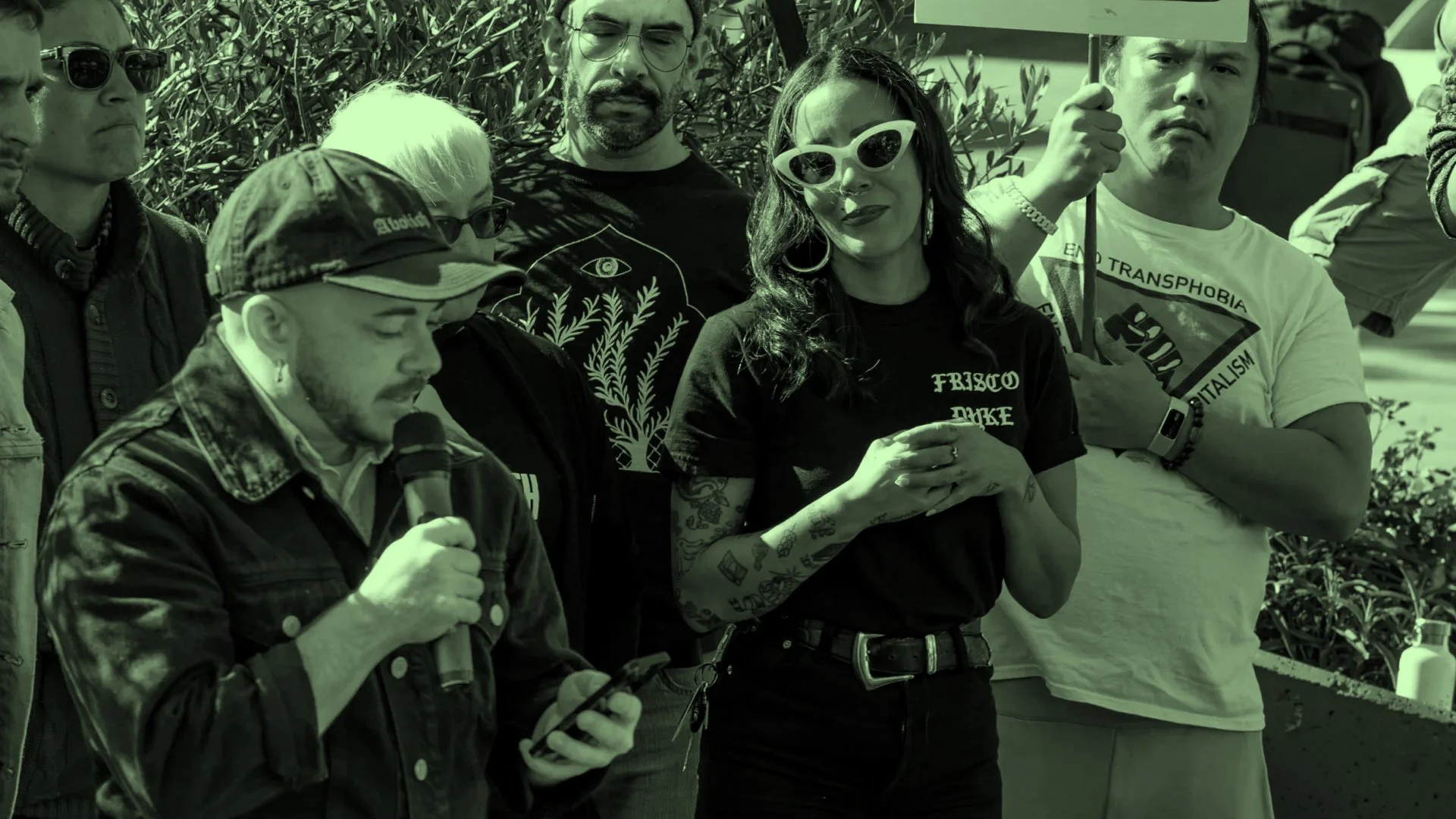
Executive Director of Lyon-Martin Community Health JM Jaffe speaks into a microphone at a rally against proposed city budget cuts to HIV and LGBTQ services at the Castro District’s Jane Warner Plaza in San Francisco, Calif., on Thursday, April 23, 2026. (Andres Jimenez Larios/Bay City News)
Advocates gather in SF’s Castro to protest proposed cuts to LGBTQ health programs
Trans communities are facing a preventable public health crisis
Our lives and dignity are quite literally on the line.
If not resourced, trans communities will be further relegated to the margins, experiencing more premature death and suffering, mental health emergencies, and hospital admissions.
Right now, we are paying the price for late intervention instead of prevention.
And with an over half a million per year proposed cut to Lyon-Martin’s budget, a clinic where trans people from all over the world come to get care by and for their own and regardless of ability to pay, the city is set to undermine access to gender affirming care in San Francisco, California, the US, and abroad.
During what the Lemkin Institute for Genocide Prevention and Human Security has said is a genocide against transgender people in this country. The San Francisco DPH should be investing in preventing this genocide, not contributing to it.
Tell Mayor Lurie that trans people and trans health belong in San Francisco, that this is our city, and our hard-fought healthcare rights and the network of care we have built to survive cannot be taken away.
We must protect our transcestors’ legacies and the future survival of our trans youth.
Stand up. Fight back.
Get involved:
LGBTQ+ Budget Town Hall
Wednesday, April 29
7 to 8 PM
SF LGBT Center
Hosted by the San Francisco People’s Budget Coalition, this town hall will break down how the budget works, what is at stake this year, and how to help shape a people’s budget that reflects community priorities.
Link for more info
Healthcare Is a Budget Decision
Public health is shaped by public policy.
The decisions that determine whether clinics stay open, harm reduction programs receive funding, reproductive healthcare remains accessible, and LGBTQ communities can receive affirming care are made through city budgets.
San Francisco allocates around $15.9 billion in public spending each year through the annual budget.
How those resources are distributed directly affects the wellbeing of communities across the city.
The People’s Budget movement in San Francisco, led by coalitions such as SF Rising, works to ensure that funding reflects community needs rather than top-down priorities.
At Lyon-Martin, we see healthcare equity as something that extends beyond clinical care. It depends on sustained public investment in the systems that support community health.
What Is the People’s Budget Coalition?
The People’s Budget Coalition is a network of community-led organizations working together to influence how San Francisco allocates its annual budget.
The coalition centers the voices of communities most impacted by systemic inequities and advocates for investments that support long-term stability, health, and access.
Key areas of focus include:
housing stability
immigrant rights
healthcare access
harm reduction
community safety
public health infrastructure
• economic justice
Our coalition work in this space is rooted in a shared understanding that community health is shaped by more than medical care alone, and that lasting health outcomes depend on stability across housing, income, and access to care.
Why Budget Policy Matters for Healthcare
Public funding determines whether essential health services exist, expand, or disappear.
Across San Francisco, community health infrastructure depends on sustained investment in:
community health clinics
harm reduction programs
reproductive healthcare services
behavioral health support
outreach programs
services for unhoused communities
HIV prevention and treatment
When funding is reduced, the impact is immediate. Services scale back, wait times increase, and access becomes more limited for the people who rely on them most.
Over time, those gaps widen. Preventable conditions go untreated, crises become more frequent, and the cost of care rises across the system.
Research shows that investment in preventive care improves long-term health outcomes and can reduce overall healthcare costs.
Sources:
https://www.ama-assn.org/about/leadership/maintaining-preventive-coverage-vital-public-health https://pmc.ncbi.nlm.nih.gov/articles/PMC12993149
What Is at Risk Right Now
Current budget proposals include significant cuts to community-based health programs across San Francisco.
At Lyon-Martin, this directly impacts programs such as:
• QTI BIPOC Healthcare Fellowship Program (Women’s Community Clinic Workforce Development legacy contract)• Peer-Based Sex Worker & Harm Reduction Mobile Health Outreach Program (St. James Infirmary Outreach legacy contract)
These programs are not supplemental. They provide direct access to care, resources, and support for communities who already face barriers within traditional healthcare systems and have been for decades
We are not alone in this.
Across the city, multiple community clinics and Department of Public Health–funded programs are facing reductions or closure due to proposed cuts, including programs serving youth, elders, and low-income communities.
This moment has made one thing clear across coalition spaces:
No single organization can respond to this alone.
The work ahead depends on coordination, shared strategy, and solidarity across community providers.
How the Budget Process Works
San Francisco’s budget is developed through several stages:
• Department proposals
• Mayor’s proposed budget
• Board of Supervisors review and amendments
• Public hearings
• Final adoption
Community organizations engage throughout this process to advocate for funding that reflects real needs on the ground.
Public participation, including testimony, organizing, and advocacy, can influence how funds are ultimately allocated.
Why Local Leadership Matters
Budget decisions are made by elected officials at the city level.
While we do not endorse candidates, it is important to understand that elections shape who is making decisions about funding priorities, public health investments, and community services.
Local leadership has a direct impact on whether resources are expanded or reduced.
Participating in local elections is one way communities can influence how these decisions are made.
How to Engage
There are many ways to take part in shaping budget decisions:
Attend public hearings
Submit public comment
Connect with advocacy coalitions like the People’s Budget Coalition
Stay informed on budget proposals and timelines
Vote in local elections
Collective action plays a critical role in protecting community health resources.
Get involved:
LGBTQ+ Budget Town Hall
Wednesday, April 29
7 to 8 PMSF LGBT Center
Hosted by the San Francisco People’s Budget Coalition, this town hall will break down how the budget works, what is at stake this year, and how to help shape a people’s budget that reflects community priorities.
Link for more info
Why This Matters
Budget decisions shape the conditions that allow communities to live, access care, and stay safe.
Healthcare equity is built through policy, funding, and collective advocacy.
When communities engage in these processes, they help ensure that public resources are directed toward care, access, and long-term wellbeing.
Staying Connected
This process does not happen all at once. Budget proposals change, negotiations continue, and advocacy efforts evolve over time.
We will continue sharing updates, context, and ways to engage as more information becomes available.
If you are part of this work or want to be, there are many ways to stay connected. Whether that means following updates, showing up to public hearings, or supporting community-led organizations, each action contributes to how these decisions unfold.
Join the Conversation
Building healthier communities depends on sustained investment in care, access, and the systems that support everyday life.
You can explore more updates and resources through The Ladder.
👉 Visit lyon-martin.org/blog
👉 Sign up for our newsletter